When most people in the UK say "Chinese food," they mean Cantonese. Sweet and sour chicken. Crispy duck pancakes. Egg fried rice. Char siu. These dishes come from Guangdong province in southern China, and they have been the dominant version of Chinese food in the UK for over a century.
But China has eight major regional cuisines. Cantonese is one of them. Northern Chinese - the food The Greedy Sheep serves - is another. They are not really comparable.
Here is what actually separates them.
Geography
- Cantonese comes from Guangdong, in the warm, wet south of China. Coastal. Subtropical. Year-round growing seasons
- Northern Chinese comes from Shaanxi, Gansu, and the Loess Plateau region around Xi'an and Lanzhou. Cold. Dry. Wheat country, not rice country. Closer to Mongolia and the Silk Road than to the South China Sea
That single fact - cold versus warm, dry versus wet - shapes everything else.
The base carb
This is the biggest divide:
- Cantonese cuisine is rice-based. Steamed rice, fried rice, congee, rice noodles
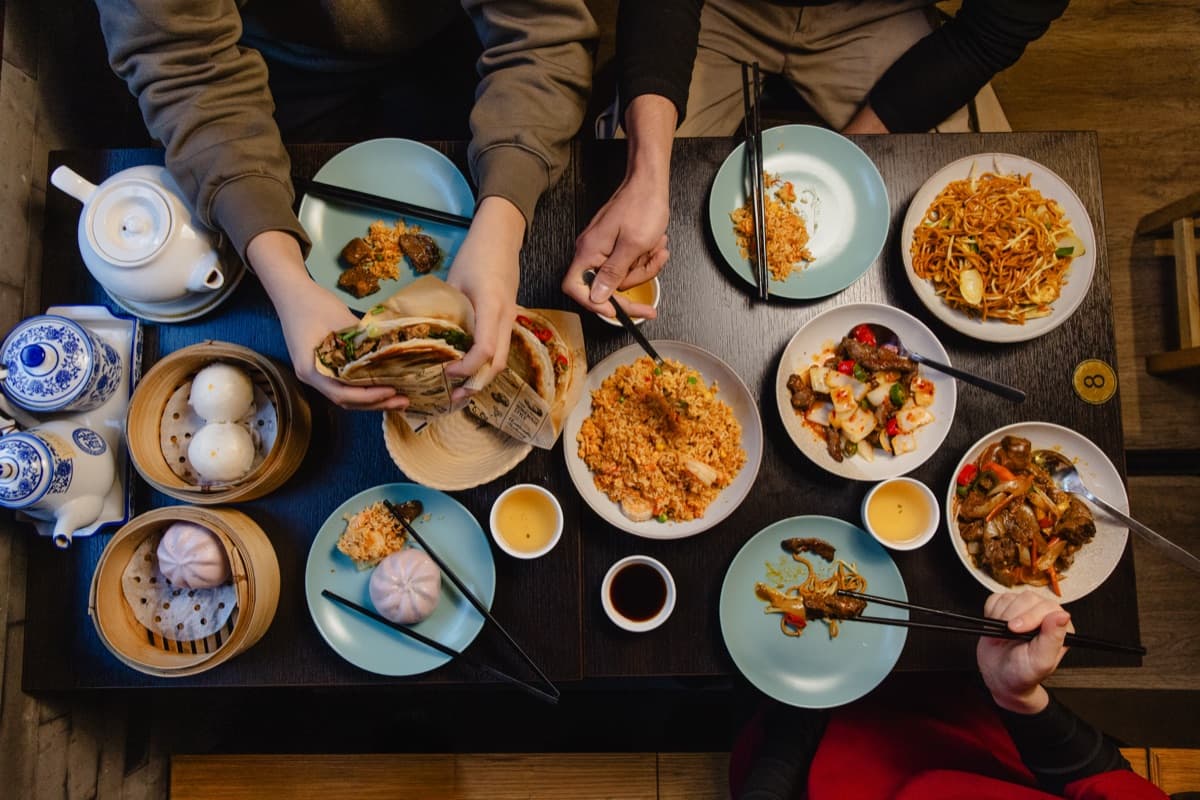
- Northern Chinese cuisine is wheat-based. Hand-pulled noodles, biang biang noodles, dumplings, pancakes, and flatbreads like the one in rou jia mo
If you grew up eating Chinese takeaway in the UK, you grew up eating rice. Northern Chinese food puts wheat at the centre of the meal.
The proteins
- Cantonese uses pork heavily, plus seafood, duck, and chicken. Pork features in nearly every classic Cantonese dish
- Northern Chinese uses lamb and beef as the main proteins, with some chicken. Pork is far less common, particularly in Hui (Chinese Muslim) cuisine
This is why Northern Chinese food translates so naturally to halal. The cuisine was built around lamb and beef, not pork. Halal Cantonese restaurants exist but they have to swap out half the menu. Halal Northern Chinese is just Northern Chinese.
The flavours
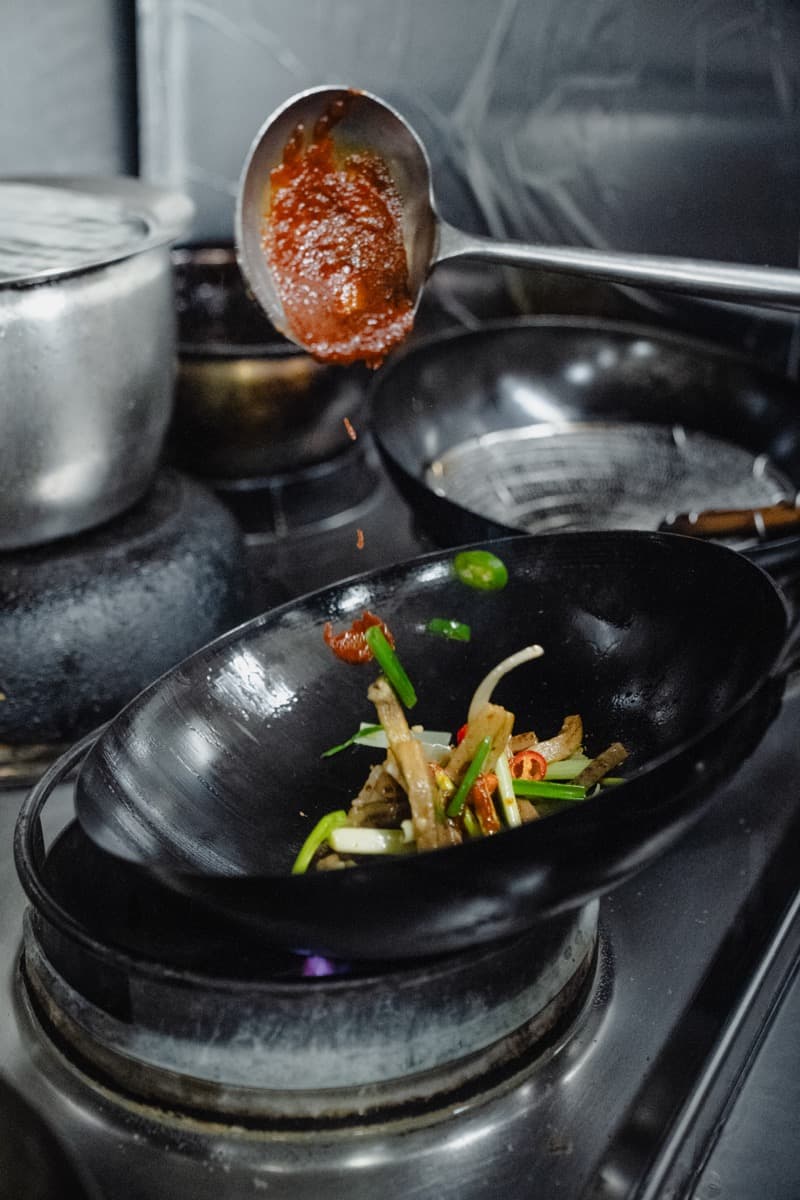
- Cantonese is built around freshness, light seasoning, and natural sweetness. Soy, ginger, spring onion, sugar, oyster sauce. Steaming and stir-frying are the dominant techniques
- Northern Chinese is bigger, bolder, and spice-driven. Cumin, Sichuan pepper, dried chillies, vinegar, garlic, sesame oil. Hand-pulling noodles and slow braising are signature techniques
Cantonese food is what you eat when you want to taste the ingredient. Northern Chinese food is what you eat when you want the cooking to do something to the ingredient.
The history
- Cantonese spread globally because of 19th-century migration from Guangdong to Hong Kong, the US, the UK, Canada, and Australia. It became the international face of Chinese food
- Northern Chinese stayed in China longer because the Silk Road cities were inland, not coastal. London is one of the few places outside China where you can eat genuine Northern Chinese street food
This is why Cantonese cuisine feels familiar in the UK and Northern Chinese feels new. It is not new. It is older. It just took longer to arrive.
Which is better?
Wrong question. They are different cuisines that share a country. Asking whether Cantonese or Northern Chinese is better is like asking whether Italian or Spanish is better. The answer depends on what you are in the mood for.
If you want delicate steamed dim sum, go to a Cantonese restaurant. If you want chewy hand-pulled noodles in lamb broth, come and see us.
We are at 8 Little Newport Street, in the heart of Chinatown. Open 12pm to 10pm daily.
Come hungry. Leave greedy.